What it is
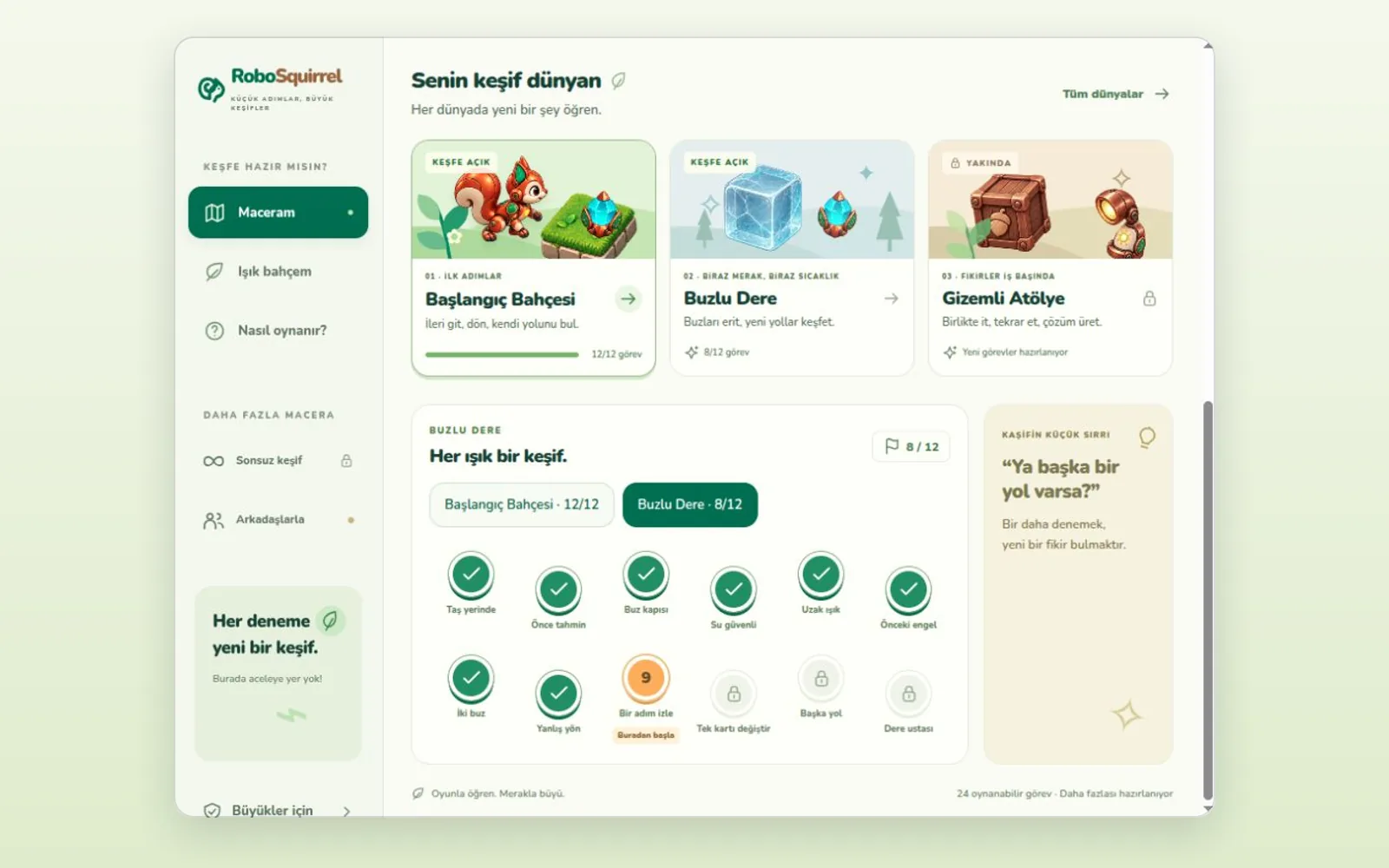
RoboSquirrel (RoboSincap in Turkish) is a coding game for children, mainly aged 4 to 9. There is a robot squirrel, a board, and a seed of light somewhere on it. The child lays out command cards (forward, turn left, turn right, heat, wait), presses run and watches what happens. If the squirrel walks into a wall, nothing is lost. You look again, change a card and try once more.
That loop is the whole idea: observe, predict, arrange, run, watch, fix. I wanted algorithmic thinking to feel like play rather than a lesson, in Turkish, for children who may not read yet.
How it grows
The campaign runs across six worlds, with 72 story tasks plus eight drills dedicated to repetition. New ideas arrive one at a time: crates to push, ice to melt with a Heat card, then Repeat, two helper procedures (P1 and P2) and conditions. In some lessons the number of cards is capped on purpose, so the only way through is a loop. Every new task starts from an empty program. There is never a half-wrong solution waiting to be debugged, and the child’s own draft is always kept.
Around the puzzles sits a story told in short scenes with spoken lines. After the campaign there is an endless exploration mode, and a free race where 2 to 4 children each set three hidden cards on the same tablet and then watch their squirrels move together.
How it’s built
One pure TypeScript rules core decides everything. React draws the interface, Phaser 4 animates the board, and if WebGL isn’t available an accessible DOM view takes over. Progress lives in the browser for up to four local explorers. There are no accounts and no real names. It installs as a PWA, works offline and keeps old saves through updates. A Capacitor project is ready for native packaging.
Where it stands
Version 0.9.0 is being piloted on tablets. What’s left is the part automated tests can’t do: real children, real hands on a real screen, and an honest look at whether it teaches what I hope it does.