What it is
A single long AI coding session that plans, writes and judges its own work is easy to start and hard to trust. I wanted the agent to behave more like a small, disciplined team, where the one who writes the code is not the one who approves it.
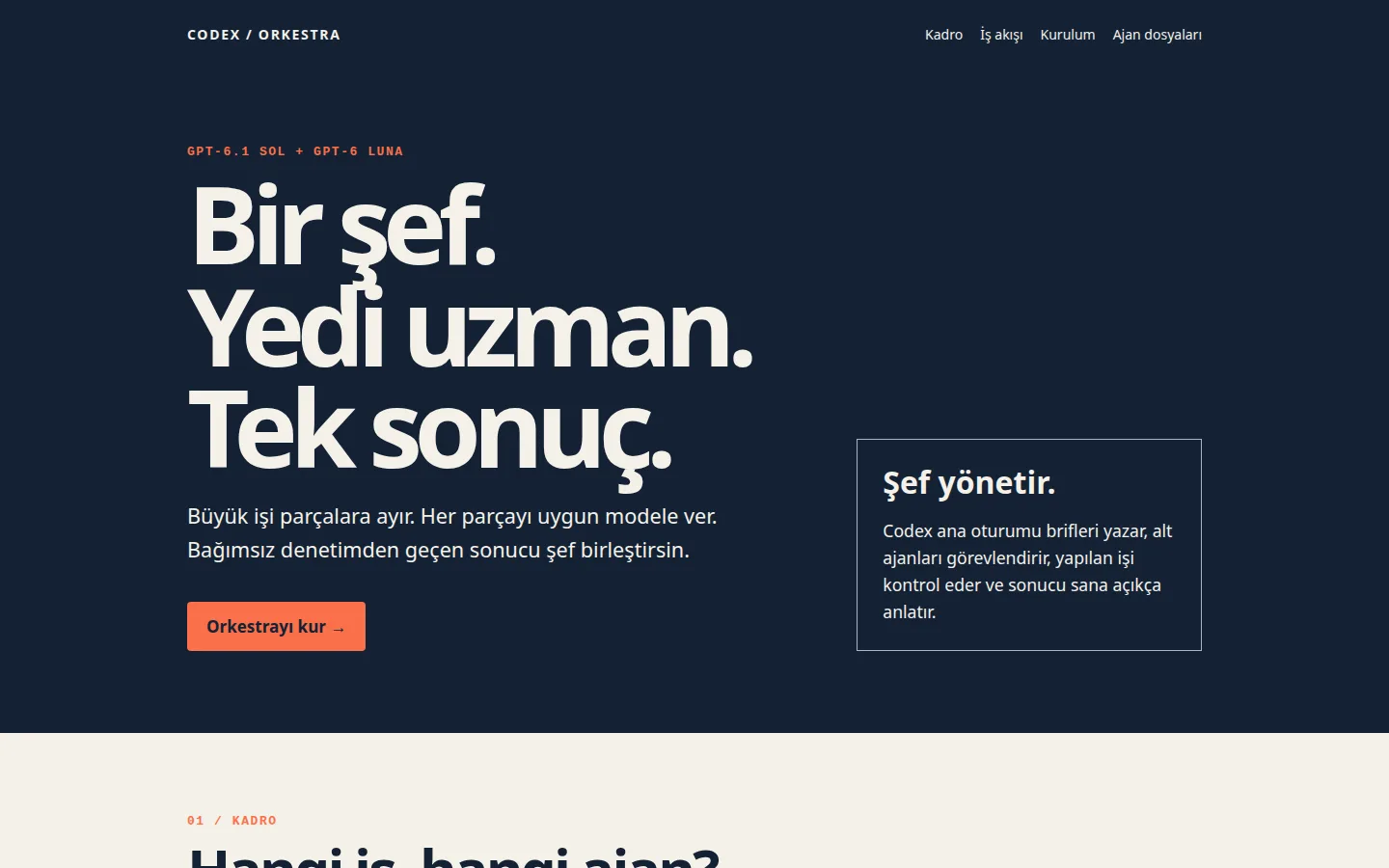
This repository is that team, packaged for OpenAI Codex. It is a short Turkish guide (a single index.html you can open in any browser) plus the files that make it work: an AGENTS.md with standing rules and seven agent profiles in .codex/agents/.
How it works
The main Codex session acts as the chief. It splits a job by size, writes a brief for each part and hands it to the right specialist: a developer, a researcher who reads but never edits, an uploader for mechanical bulk work, a designer and a video producer. Each profile pins a model and a reasoning effort, so cheap work stays cheap and careful work gets more thought.
Medium and large changes then go to an auditor that did not write the code. If the work touches security, payments, privacy or possible data loss, a separate risky-work auditor reviews it instead. A few rules keep the team honest:
- Briefs always use the same headings: task, your files, don’t touch, read first, definition of done, report.
- Two agents never write to the same file at the same time; parallel work goes to separate copies and branches.
- After three rounds of “fix it”, the chief stops and tells the user exactly what is blocking.
- No invented sources, dates, numbers or test results. The final report says what was done, how it was verified and what risks remain.
Setting it up takes a minute: copy AGENTS.md and the .codex/ folder into your project root and open Codex there.
Credit
The idea comes from Rues Community’s Yapay Zekâ Orkestrası. I wrote this version independently for Codex, with my own model mapping, and I did not copy the original page’s HTML or images. The source is linked in the README and on the guide page.
Where it stands
It is public on my GitHub and free to copy. Which agents and models you can actually use depends on your Codex account, so treat the model table as a starting point and adjust it to what you have.